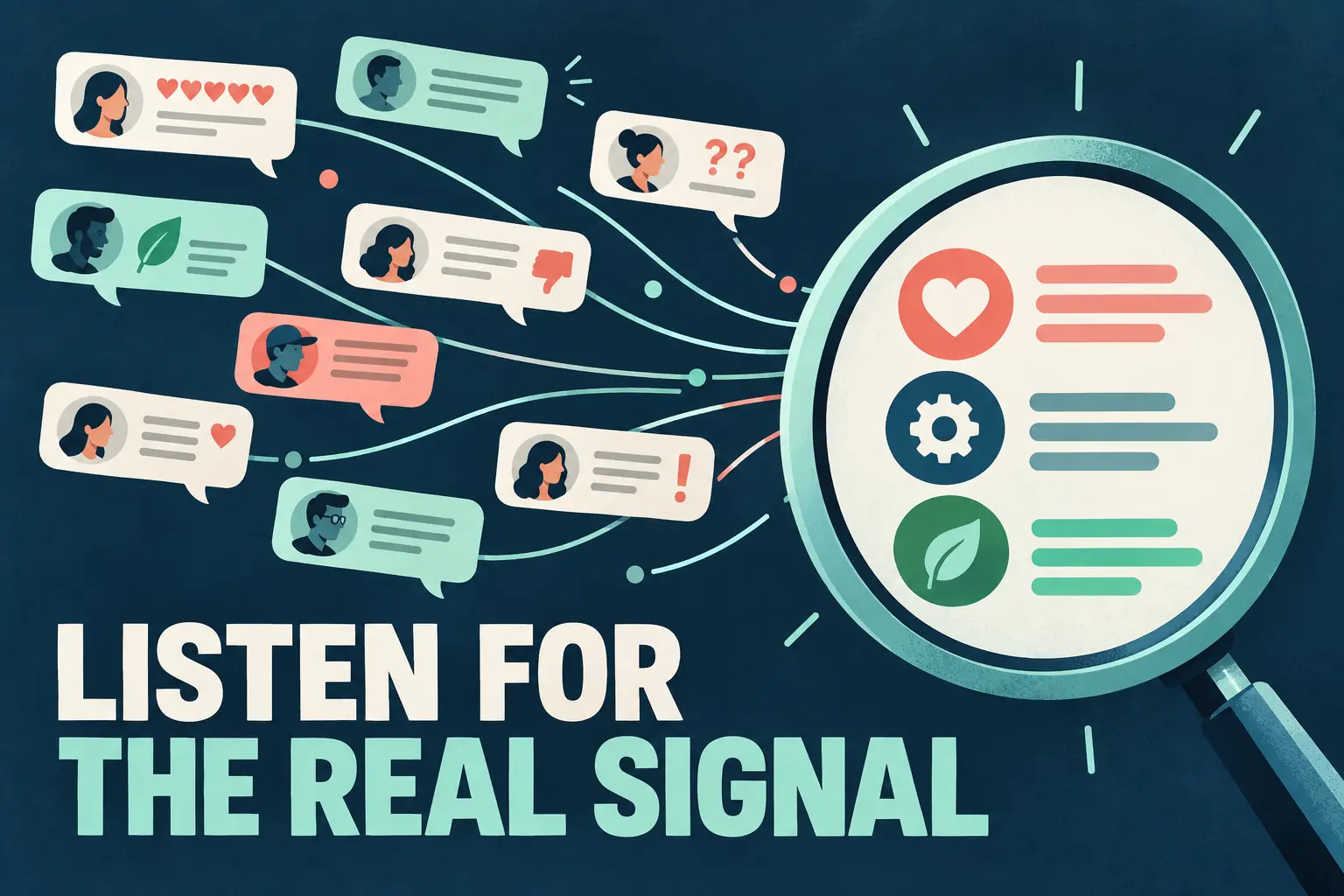
Social listening means examining relevant online discussions for questions, experiences and themes. It can suggest what to investigate or explain. Public comments are a selected sample, not a complete account of what an audience thinks or feels.
Begin with a clear goal
Write the decision you need to inform. You might want to understand a recurring setup question or compare how people describe two booking processes. Choose the source because it contains relevant experiences, not because it produces a large volume of comments.
Interviews, surveys, permitted business records and published research may answer different parts of the question. Online observation does not automatically replace them or cost less.
Keep source context
Use a record with the question, observation, source and date, interpretation, uncertainty and next decision. Include the wording needed to understand the point while avoiding unnecessary names or personal details.
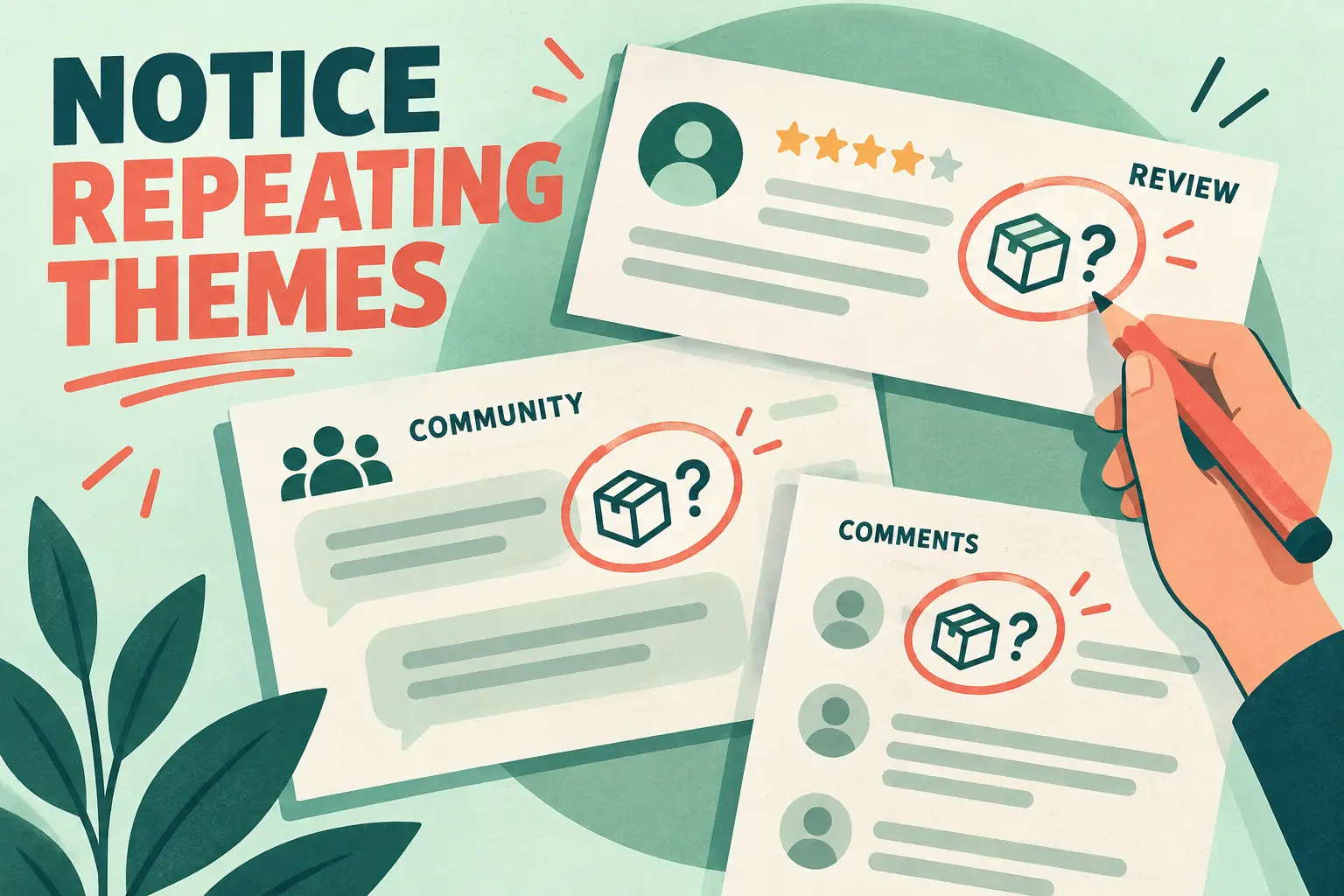
Do not infer emotion from punctuation or assume a complaint proves a product defect. Note what the person reports and what would need checking. Keep contradictory accounts alongside repeated themes.
Choose relevant searches and tools
Search for task descriptions, product terms or questions related to the decision. Use permitted sources and follow access rules. Track relevant discussions rather than assembling profiles of named people across unrelated websites.
A tool may help collect permitted mentions, but its actual coverage, access, cost and data handling need checking before use. Automated sentiment labels are interpretations to inspect, not established facts about a person. Avoid collecting more information than the question requires.
Turn a finding into a checkable change
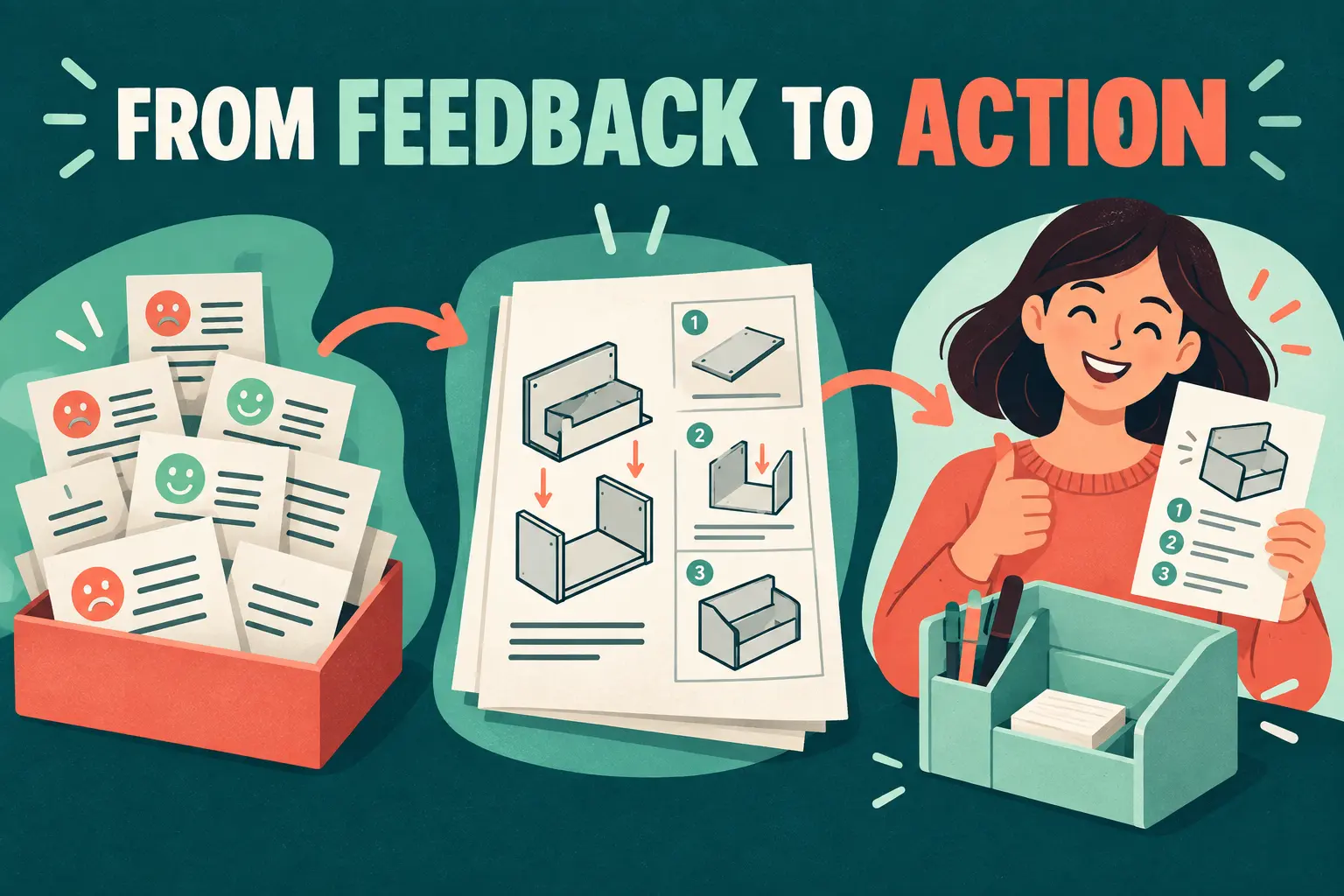
Fictional example: two enquiries and a public discussion contain questions about preparing text for a new website. The provider writes a guide showing the required headings and a completed example. A subsequent check asks a reader what they would prepare.
Record the source and number of observations. If the reader remains confused, revise the explanation. A click on the guide does not show that it was understood, and the change does not establish that trust or sales increased.
Try this: choose one unanswered audience question. Collect a small, relevant set of observations, write what they support and what remains unknown, then make one justified change or ask a clarifying question.