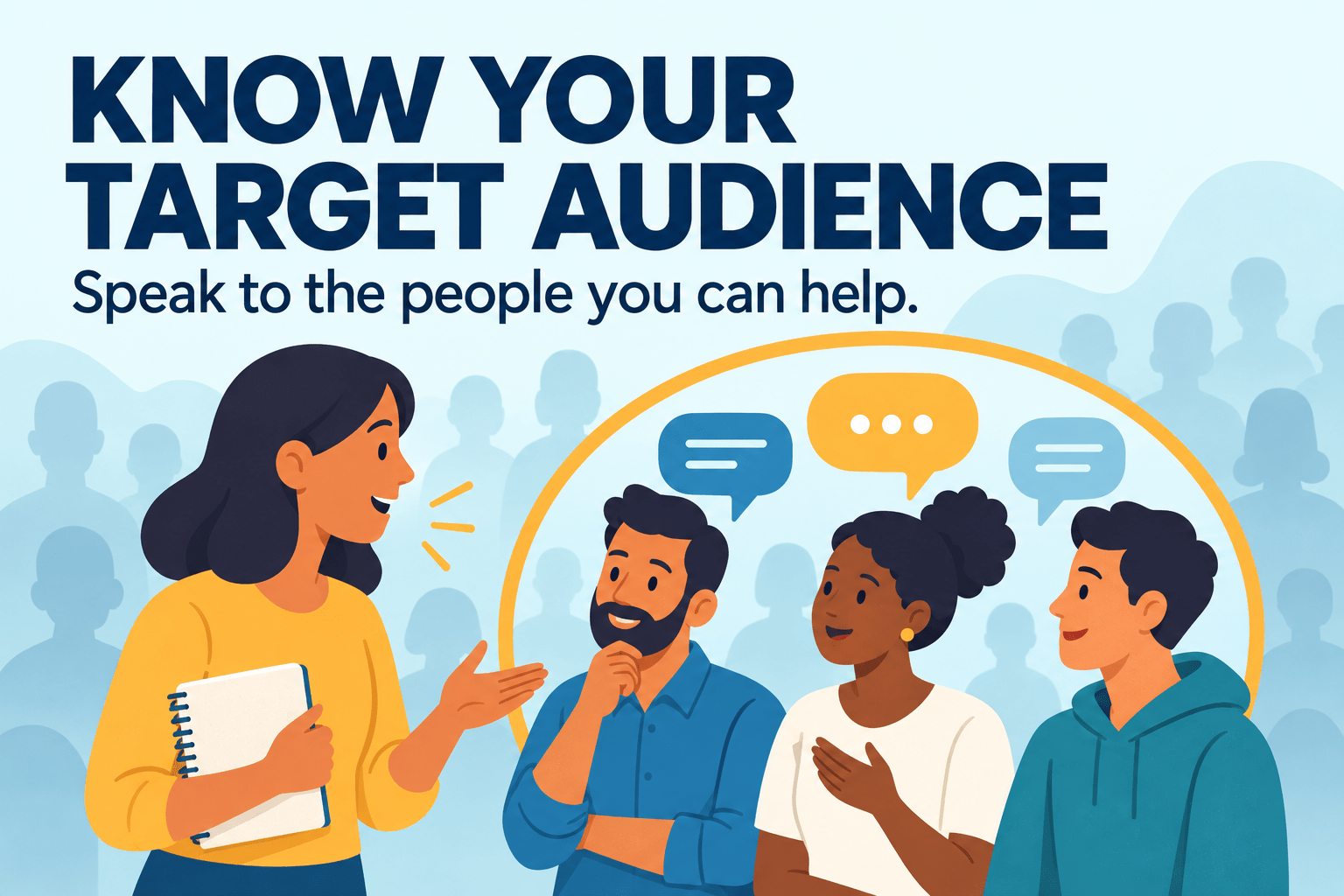
Your marketing becomes more useful when you know who it is for. Identifying your target audience helps you choose the right examples, explain relevant benefits, and give readers a clear reason to pay attention.
“Speaking to everyone means speaking to nobody” is a useful warning about vague communication. It is not a literal rule: businesses can serve several groups. The problem starts when one message tries to cover every possible need and loses the detail that makes it meaningful.
For small business owners writing a website, email or blog, the practical question is: who should recognise themselves in this message?
Why a specific audience matters
A target audience is the group you intend a particular message to reach. Knowing that group gives you a basis for deciding what to explain, which questions to answer, and where to share your content.
The Australian Government’s guide to identifying your target market explains that trying to sell to everyone makes marketing harder to focus. It recommends researching customers, identifying meaningful groups, and describing who you want to serve.
Specificity also gives readers something concrete to assess. They can decide whether your offer fits their situation. That is more useful than a broad promise such as “great solutions for all your needs”.
Make the difference visible
Consider this fictional example of a bookkeeping service:
Broad: “We help businesses manage their finances.”
Focused: “Monthly bookkeeping for self-employed designers who need their invoices and expenses organised.”
The focused version identifies a group, a service and a practical task. It gives a designer more information without claiming guaranteed results. Another audience might need a different message from the same business.
Choosing an audience for one piece of content does not prevent other people from becoming customers. It simply helps you decide what that piece should say.
You can have more than one audience. A training provider, for example, might teach beginners and experienced managers. Each group may need different explanations and examples. Create a separate message when those needs differ, while keeping the facts about your business consistent.
Research before you describe
Start with evidence you can check: customer enquiries, sales conversations, feedback and the reasons people give for choosing your service. If you are starting out, speak with potential customers and examine relevant industry research.

The U.S. Small Business Administration’s market research guidance distinguishes existing research from direct customer research, including surveys and interviews. Use both to test your assumptions.
Ask open questions such as “What prompted you to look for help?” and “What did you compare before deciding?” Record the language people use. A few conversations can suggest patterns; they do not prove that everyone in a group thinks alike.
Go beyond age or location when those details do not explain the need. For a business service, the customer’s role, working situation and buying process may be more useful. Keep untested assumptions separate from confirmed findings.
Look for evidence that challenges your first impression as well as comments that support it. Revise the description accordingly.
Turn your findings into one clear message
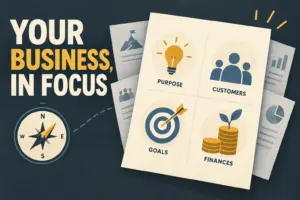
Write a short audience description using these four prompts:
Then review your next piece of content. Replace general claims with relevant details, answer a real question, and choose a next step that suits the reader’s situation. This could be reading a guide, comparing options or asking about your service.
Check how people respond. Do their enquiries match the group and need you intended to address? Use that feedback to refine your description.
Start with one message today. Name its intended reader, remove details that do not serve them, and make the useful point clear. You do not need to speak to everyone to give the right people something worth reading.