
Know Your Target Audience: Why Speaking to Everyone Reaches Nobody

Define who your marketing is for, research what matters to them, and turn a broad message into useful, specific communication.
Use social listening to investigate an audience question
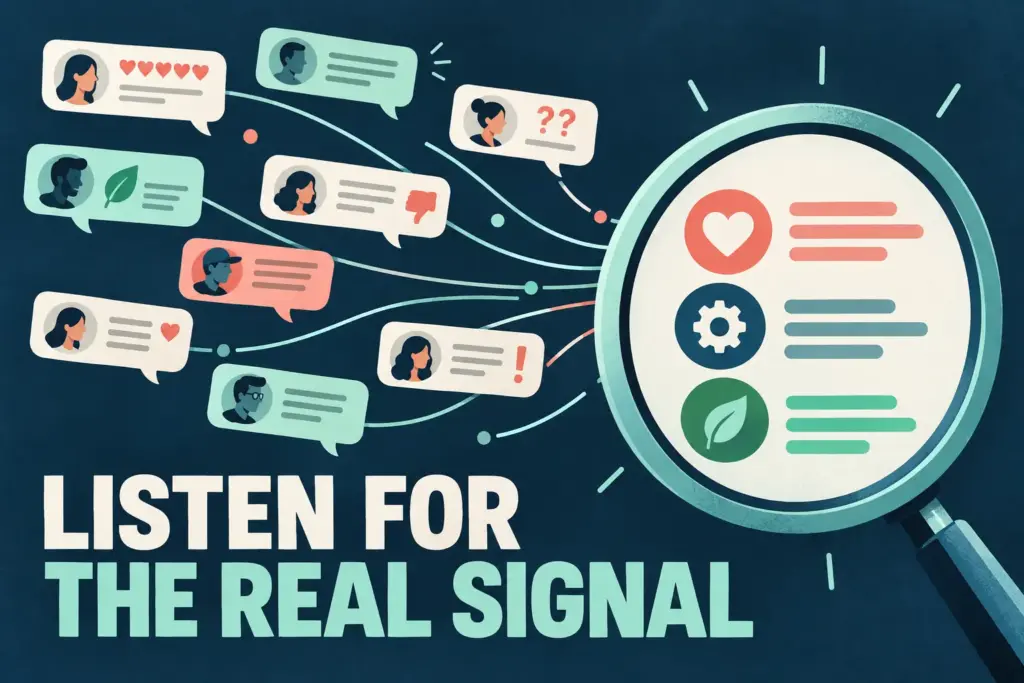
Social listening means examining relevant online discussions for questions, experiences and themes. It can suggest what to investigate or explain. Public comments are a selected sample, not a complete account of what an audience thinks or feels. Begin with a clear goal Write the decision you need to inform. You might want to understand a […]
Use customer testimonials as specific evidence

A testimonial is a real customer’s account of an experience with a product or service. It can help you assess a particular question when the details and limits are clear. It cannot promise the same experience for everyone. You do not need customers of your own to understand testimonials. Start as a reader deciding what […]
Make business values visible in everyday decisions

A value is useful when it guides a decision someone can observe. Saying that your business is transparent or reliable gives the reader little evidence until you explain what you do. Define the practice Choose a value you try to follow and identify a related customer decision. Fictional example: transparency means stating the included work, […]
Listen carefully and respond to the actual concern

Useful customer communication starts with checking what a person means. Emotional intelligence can be a prompt to notice your reaction, listen and choose a considered response. It is not a way to diagnose a customer or guarantee trust. Separate observation from interpretation Capital letters, punctuation or a short reply can have several explanations. Record what […]
Six ways to make your business easier to understand

Someone can recognise a business name without knowing what the business offers. These six checks help you explain the work, who it is for and how an interested person can find out more. You can use the fictional examples to learn before you have a business, website or customers. In this article, your audience means […]
Find and improve a step in your business operations

When it comes to business plans, certain sections like the executive summary, marketing plan, or financial projections, tend to steal the show.
Summarise your business idea and what you still need to check

Use a worked example to summarise a business idea, separate observations from guesses, and identify what still needs checking.
Use what buyers tell you to choose what to check next

Compare buyers’ answers, separate what they said from what you guessed, and choose a follow-up question. Includes fictional birthday-card examples.
Use an honest story to explain your offer

A crucial component of every business plan is the marketing plan, which defines how you’ll target and connect with your audience.