
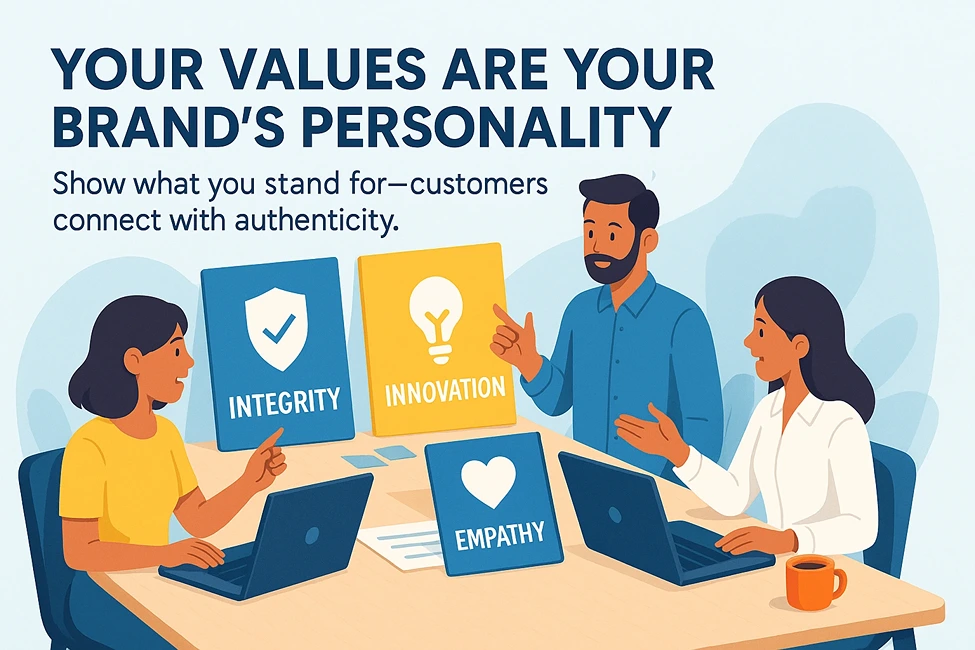
Learn how integrating core values into your business strengthens brand likability, builds customer trust, and creates lasting emotional connections.
The first step in building long-term relationships with customers is helping them know and like your business. People rarely buy from brands they do not feel connected to. When your audience relates to your purpose and principles, trust begins to form naturally.
One of the fastest and most authentic ways to build this connection is by integrating your core values into everything your business does. Core values are the beliefs and guiding principles that shape decisions, actions, and culture. They reflect what you stand for, how you behave, and the impact you aim to make. When your audience sees your values clearly expressed, they are more likely to develop emotional loyalty to your brand.
Defining What You Stand For
Every strong brand begins with clear values. Start by asking yourself what drives your business and what you want customers to remember you for. Consider three key questions:
- What is important to you? Think about the motivators behind your work and the difference you want to make in customers’ lives.
- What do you do well? Reflect on areas where you consistently create positive results.
- What do you aspire to achieve? Envision what success means for your brand in the future.
You can also think about what you prefer to avoid being known for, whether that involves certain business practices or customer experiences that do not align with your ethics.
Once you have reflected on these ideas, identify a few keywords that capture your values clearly. Examples may include customer-focused, sustainability, diversity and inclusion, innovation, transparency, or empowerment. These words become touchpoints for communicating what your brand stands for.
Explaining and Sharing Your Values
After defining your values, communicate them clearly and publicly. Create a section on your website dedicated to your mission and values, and explain what each principle means in simple terms. Instead of listing vague statements, describe how each value influences decisions, services, or interactions.
For example, if one of your core values is sustainability, explain how that commitment affects your packaging choices, supplier relationships, or community involvement. This makes the value real rather than abstract.
You can extend this message by including short summaries of your values in your email footer, social media bio, or printed materials. Consistent visibility helps customers understand that your values guide everything you do.
Using Testimonials to Reinforce Your Values
While self-promotion has limited impact, customer voices carry immense weight. Seek testimonials that naturally highlight your values. For example, if your value is customer care, display a testimonial where a client praises your responsiveness or attention to detail.
Video testimonials are particularly powerful because they allow customers’ emotions to shine through. Feature these stories on your website, blog, or social channels to show real-world proof that you live your values daily.
Communicating Values Through Storytelling

Stories create emotional connection and make values tangible. Share examples of moments when your values influenced major business decisions, shaped a new product, or guided a customer interaction.
A compelling story could focus on the origins of your business. Explain what problem inspired your brand or how your principles helped you overcome a challenge. For instance, a small tech company might describe how a commitment to innovation drove the development of a tool that simplifies everyday tasks for users.
These narratives help customers feel your values in action rather than merely reading them.
Practising Cause Marketing
Aligning your business with a meaningful cause demonstrates your values in practice. Cause marketing involves collaborating with a nonprofit or supporting a social issue that aligns with your beliefs.
You might donate a portion of sales to environmental protection, sponsor educational programs, or participate in community events that reflect your mission. Choosing causes that genuinely connect with your business identity helps attract customers who share those values. It also strengthens emotional loyalty because people feel good supporting a brand that contributes positively to society.
Partnering with Like-Minded Influencers
Collaborations with influencers who share your values expand your reach while reinforcing credibility. Choose partners who are authentic representatives of the same beliefs you promote.
For example, a sustainable fashion brand could collaborate with an eco-conscious influencer for a video campaign or co-designed product line. Such partnerships expose your brand to new audiences while confirming your commitment to your values.
When these collaborations feel genuine, they can rapidly accelerate awareness and likability among audiences who already trust the influencer.
Making Values Part of Everyday Action
Defining and promoting your values is only the beginning. To truly resonate, they must guide everyday decisions. Values should shape how you treat customers, develop products, and engage employees.
Brands that consistently live their principles become more than service providers. They become trusted partners in customers’ lives. Integrating values creates a sense of alignment and authenticity that makes people feel comfortable supporting you long-term.
Learn more…
How to Get Your Audience to Know, Like, and Trust You for Strong Relationships and Consistent Sales Growth
Ready to grow a loyal audience that connects with your brand?
How to Get Your Audience to Know, Like, and Trust You is a friendly, practical course that guides you through real-world steps to build genuine relationships, boost engagement, and earn lasting customer trust that leads to consistent sales.