

A testimonial is a real customer’s account of an experience with a product or service. It can help you assess a particular question when the details and limits are clear. It cannot promise the same experience for everyone.
You do not need customers of your own to understand testimonials. Start as a reader deciding what someone else’s account tells you. If you later collect feedback for a business, the same distinction will help you avoid making claims the feedback cannot support.
Look for the question the account can answer
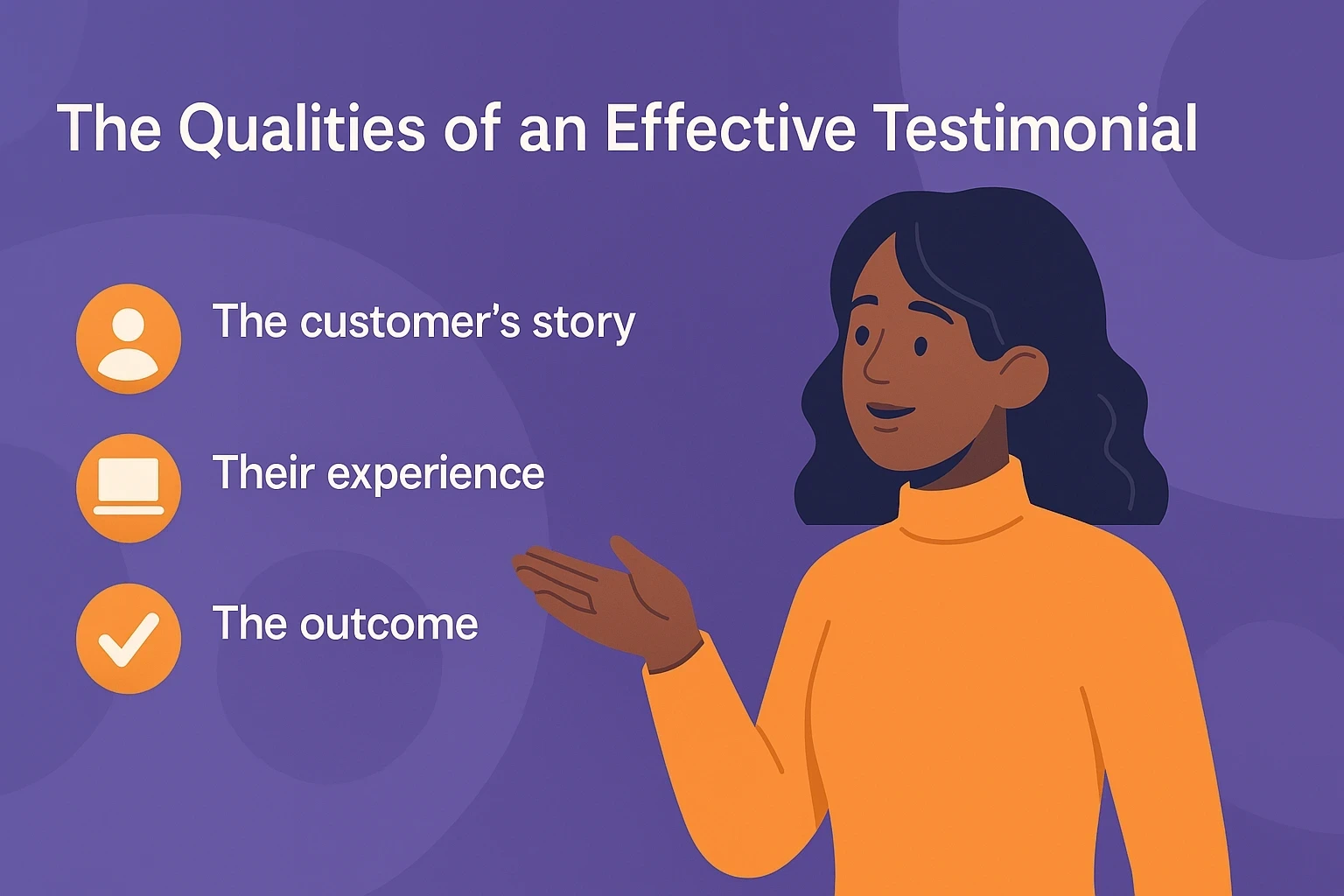
Imagine a fictional adult sewing class. Someone deciding whether to attend wants to know how the teacher helps a beginner. The following is an invented example for teaching, not a real customer testimonial: “I had never used a sewing machine. The teacher showed me how to thread it, then watched while I tried it myself. By the end of that lesson, I could thread that machine without help.”
The account describes a starting point, what the teacher did and what the learner reports doing afterwards. It supports a limited account of help with threading one machine in one lesson. It says nothing about learning to make clothes, other teachers or other learners.
If your question is “Which machine will I use?”, ask for the equipment details. If your question is “What will I practise?”, look for the lesson description or a labelled demonstration. A testimonial about friendliness would not answer either question.
Separate a report from a guarantee
A customer can describe what they remember and how they felt. That is their report, not independent proof that the teaching caused every change they experienced. Earlier practice or help from someone else may also matter.
Check when the experience happened and which product, lesson or service it concerned. An account of a different class may not describe the one you are considering. Missing details are reasons to ask questions, rather than fill the gaps with a favourable guess.
If you later ask customers for feedback
Ask about the experience, without supplying praise for them to repeat. For a class, you might ask: “What did you want to learn? What happened during the lesson? What could I explain more clearly?” Accept criticism as well as praise, and let the person decline.
Before using someone’s words publicly, ask them to approve the exact wording, the name or other identifying details you will display, and where you intend to publish it. Keep their reply. For example, permission for a written comment on one class page does not by itself cover using their photograph in an advertisement.
If you gave someone a free place or paid them for feedback, explain that arrangement beside the account. Readers need that context when weighing the recommendation. These are recommendations for honest communication; applicable advertising and privacy rules need a separate check for your location and use.

Keep the person’s meaning
Do not invent a customer, combine several people into one apparently real person, or remove a qualification that changes what was said. For example, removing “with the teacher’s help” would turn assisted work into an apparent claim of independent ability.
A publicly visible comment is not an invitation to copy the person’s name, photograph or screenshot into your marketing. Ask for permission for that use. If the person withdraws permission, stop using the account and remove it from the places you control.
What if you have no testimonials?
Do not create pretend feedback to fill the gap. Explain what you offer, what you can show and what is still untested. If you have made a demonstration, label it as your own example and say what it shows. A demonstration is not a customer result.
To practise now, reread the fictional account near the start. It supports a claim about one learner threading one machine after help. It does not support “everyone will sew independently after one lesson”. That difference is the limit to preserve whenever you read or use a testimonial.